Vintage Poster Archives
PHI Nerfi Jazz-Club 1930s | Vintage Concert Poster
PHI Nerfi Jazz-Club 1930s | Vintage Concert Poster
Couldn't load pickup availability
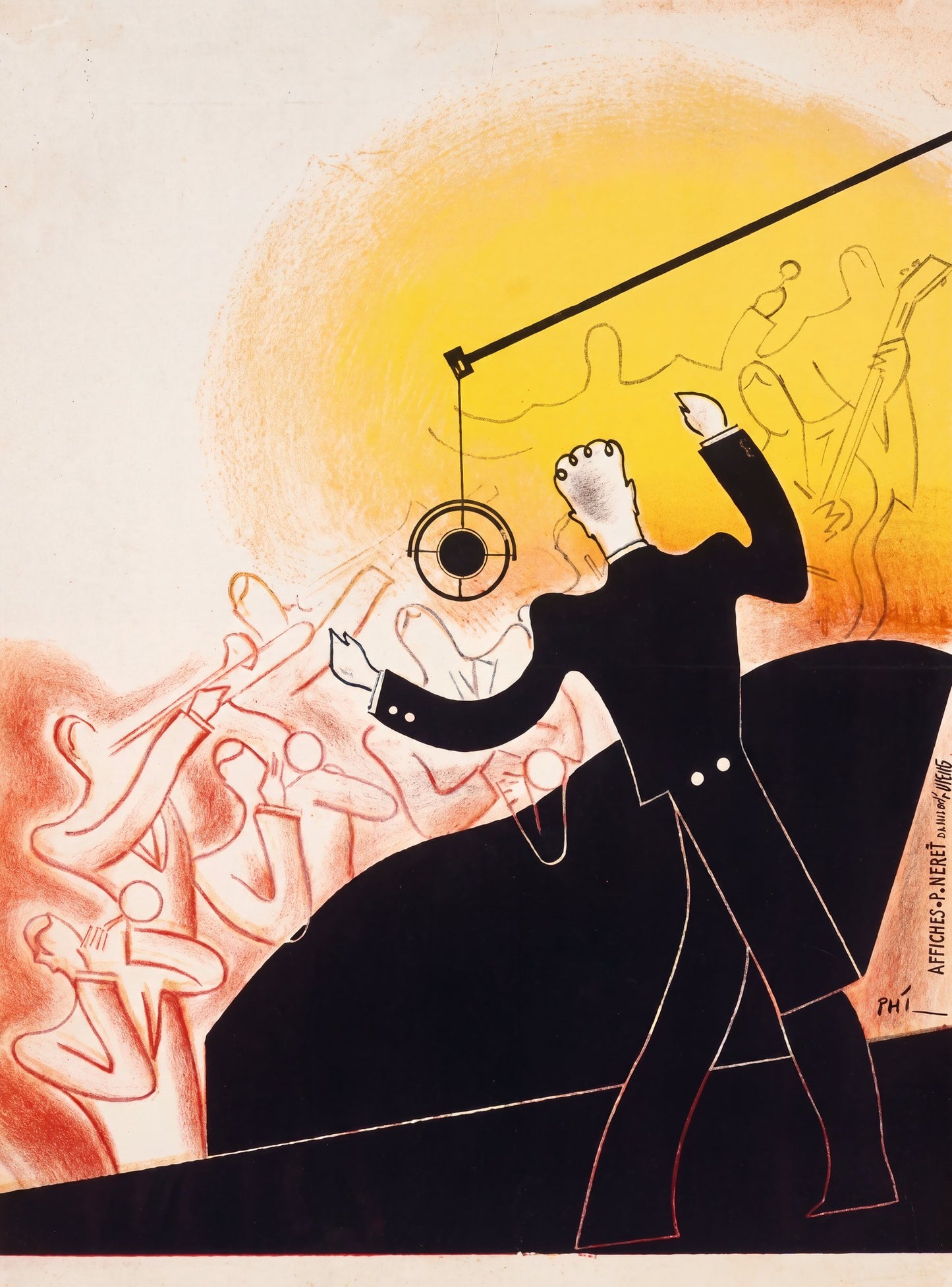
A conductor in full black tailcoat stands at the front of the stage, arms raised, baton sweeping a long diagonal line across the upper half of the composition. A circular radio microphone hangs suspended at centre. The jazz orchestra behind him is drawn in loose burnt-sienna crayon outlines, violinists to the left, a double-bass player upper right, while the conductor himself is a flat black silhouette set against a radial burst of cadmium yellow and amber. The whole design is resolved in three colours, printed with the tonal depth of stone lithography.
The poster was designed by PHI, the working name of Paul Nerfi, whose Lille-based printing studio, Affiches P. Nerfi (later Grau Nerfi & Cie), produced Art Deco advertising and entertainment lithographs across the late 1920s and 1930s. The title references Jazz-Club St. Germain, one of the dance-hall and jazz venue promotions circulating in northern France during the period when jazz was moving outward from Paris into the provincial cities. The printer credit and PHI's plate signature appear at the lower right.
PHI's method, solid silhouette foreground figure against loosely worked background crayon, prefigures the gestural vocabulary that would become standard in 1930s and 1940s music poster design. The ghost musicians recede; the conductor commands. The composition holds at distance, which is exactly what a venue poster requires.
Reproduced as a vintage concert poster archival print on 200gsm Enhanced Matte Fine Art Paper. The flat graphic planes and spare palette of the original lithograph read particularly well in matte finish. The poster sits naturally alongside Art Deco travel and advertising work from the same period, or as a standalone piece for anyone drawn to Jazz Age France and the graphic culture around it.