Vintage Poster Archives
Soviet Za Mir 1960s | Red Army Soldier Peace Propaganda Poster
This service is currently unavailable,
sorry for the inconvenience.
Pair it with a frame
Frame options are for visualization purposes only.
FRAME STYLE
MATTING SIZE
BUILDING YOUR EXPERIENCE
powered by Blankwall
Take a few steps back and let your camera see more of the scene.
powered by Blankwall
Was this experience helpful?
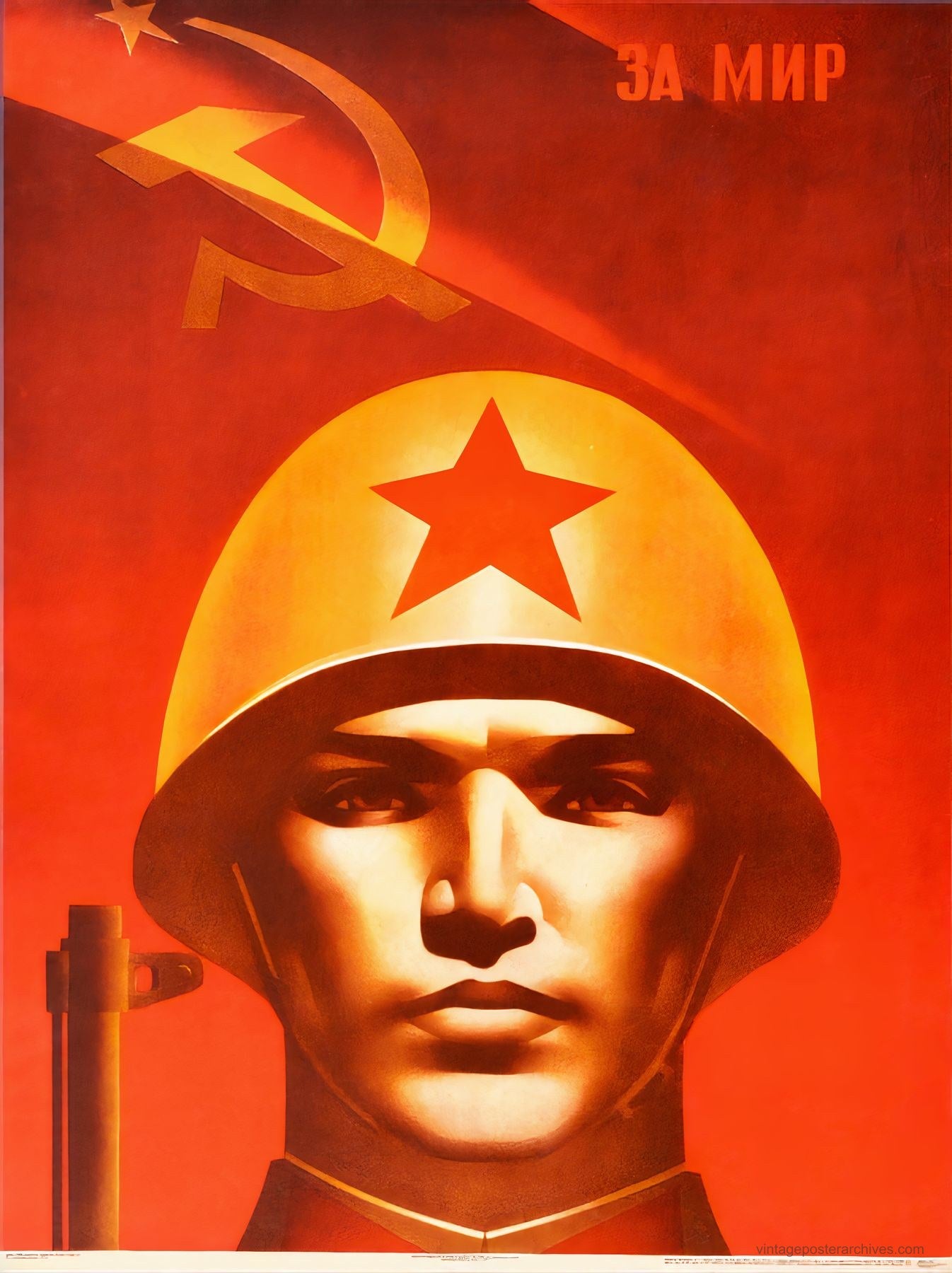
A Red Army soldier in military helmet bearing the red star gazes forward against a radiant orange-red background. The hammer and sickle symbol floats above, with Cyrillic text 'За мир' (For Peace) declaring the Soviet Union's message of peace through strength.
Designed during the height of the Cold War in the 1960s, this poster represents the Soviet Union's approach to military readiness and peaceful intentions. The socialist realist style presents the soldier as both protector and symbol of Soviet ideals, rendered in the bold visual language that characterised state propaganda.
The composition's directness and saturated colour palette exemplify how Soviet artists communicated complex political messages through accessible imagery. The poster served as both art and political communication during a tense period of international relations.
This archival print preserves a significant piece of Cold War visual culture, when propaganda posters bridged the gap between state ideology and popular understanding.
Couldn't load pickup availability
Share
A Red Army soldier in military helmet bearing the red star gazes forward against a radiant orange-red background. The hammer and sickle symbol floats above, with Cyrillic text 'За мир' (For Peace) declaring the Soviet Union's message of peace through strength.
Designed during the height of the Cold War in the 1960s, this poster represents the Soviet Union's approach to military readiness and peaceful intentions. The socialist realist style presents the soldier as both protector and symbol of Soviet ideals, rendered in the bold visual language that characterised state propaganda.
The composition's directness and saturated colour palette exemplify how Soviet artists communicated complex political messages through accessible imagery. The poster served as both art and political communication during a tense period of international relations.
This archival print preserves a significant piece of Cold War visual culture, when propaganda posters bridged the gap between state ideology and popular understanding.
