Vintage Poster Archives
Make-Do and Mend 1943 | Mrs Sew-and-Sew WW2 Poster
This service is currently unavailable,
sorry for the inconvenience.
Pair it with a frame
Frame options are for visualization purposes only.
FRAME STYLE
MATTING SIZE
BUILDING YOUR EXPERIENCE
powered by Blankwall
Take a few steps back and let your camera see more of the scene.
powered by Blankwall
Was this experience helpful?
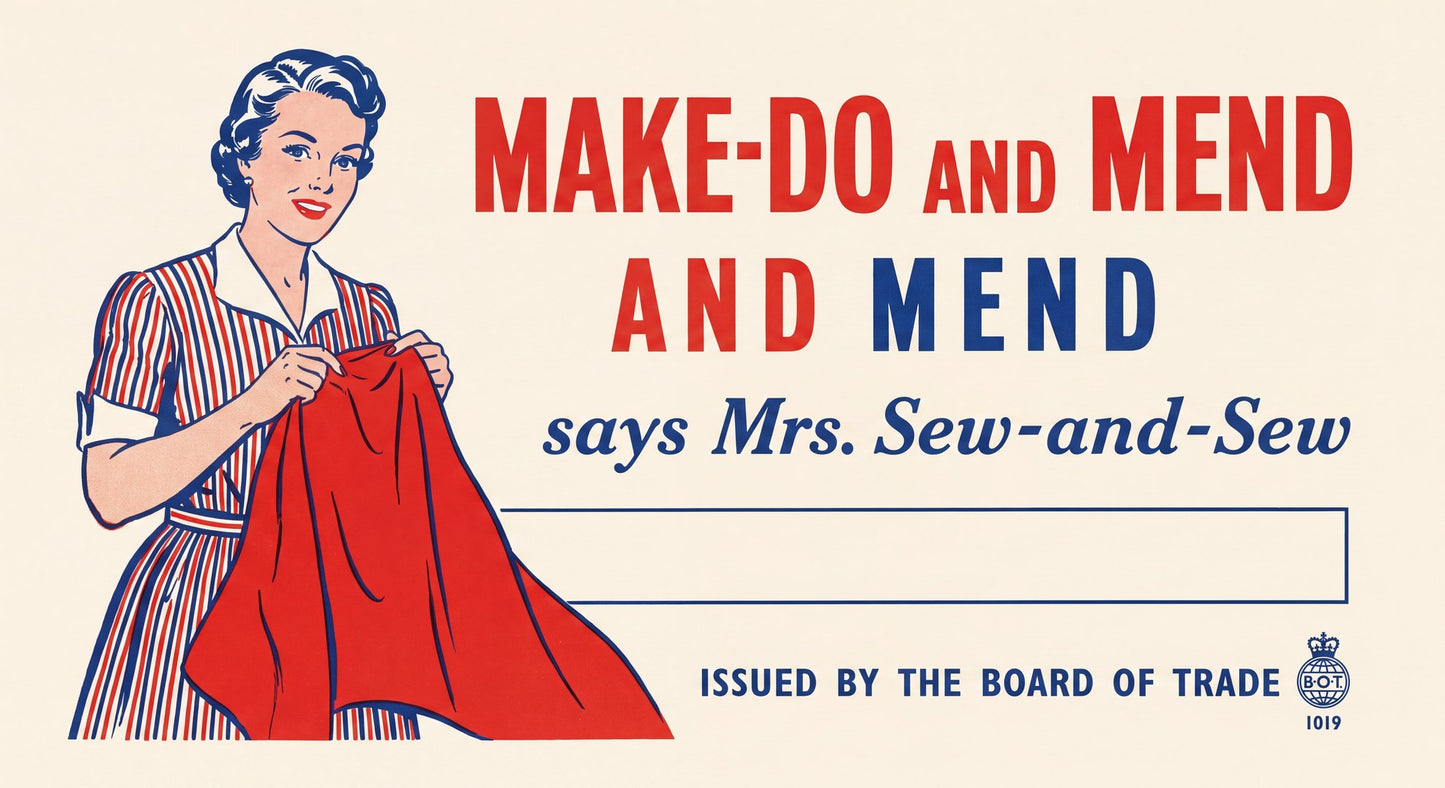
A woman in patriotic red, white and blue stripes sits with perfect posture, sewing a red garment with deliberate care. Her blue hair is styled in the practical waves of wartime Britain, and the bold sans-serif message frames her domestic labour as national duty.
Commissioned by the Board of Trade in 1943, this poster introduced Mrs Sew-and-Sew to households across Britain. As clothes rationing reached its peak, the government needed a friendly ambassador for the Make-Do and Mend campaign. The character embodied the resourcefulness and skill that would see families through fabric shortages and ration book restrictions.
The poster depicts a pivotal moment when domestic economy became wartime strategy. Mrs Sew-and-Sew represented more than needle skills; she symbolised the transformation of everyday thrift into patriotic contribution. The campaign helped establish principles of repair and reuse that shaped British attitudes to consumption for decades.
Reproduced as an archival print from the Imperial War Museums collection, this poster documents the intersection of government communication and home front reality during Britain's most challenging years.
Couldn't load pickup availability
Share
A woman in patriotic red, white and blue stripes sits with perfect posture, sewing a red garment with deliberate care. Her blue hair is styled in the practical waves of wartime Britain, and the bold sans-serif message frames her domestic labour as national duty.
Commissioned by the Board of Trade in 1943, this poster introduced Mrs Sew-and-Sew to households across Britain. As clothes rationing reached its peak, the government needed a friendly ambassador for the Make-Do and Mend campaign. The character embodied the resourcefulness and skill that would see families through fabric shortages and ration book restrictions.
The poster depicts a pivotal moment when domestic economy became wartime strategy. Mrs Sew-and-Sew represented more than needle skills; she symbolised the transformation of everyday thrift into patriotic contribution. The campaign helped establish principles of repair and reuse that shaped British attitudes to consumption for decades.
Reproduced as an archival print from the Imperial War Museums collection, this poster documents the intersection of government communication and home front reality during Britain's most challenging years.
