Vintage Poster Archives
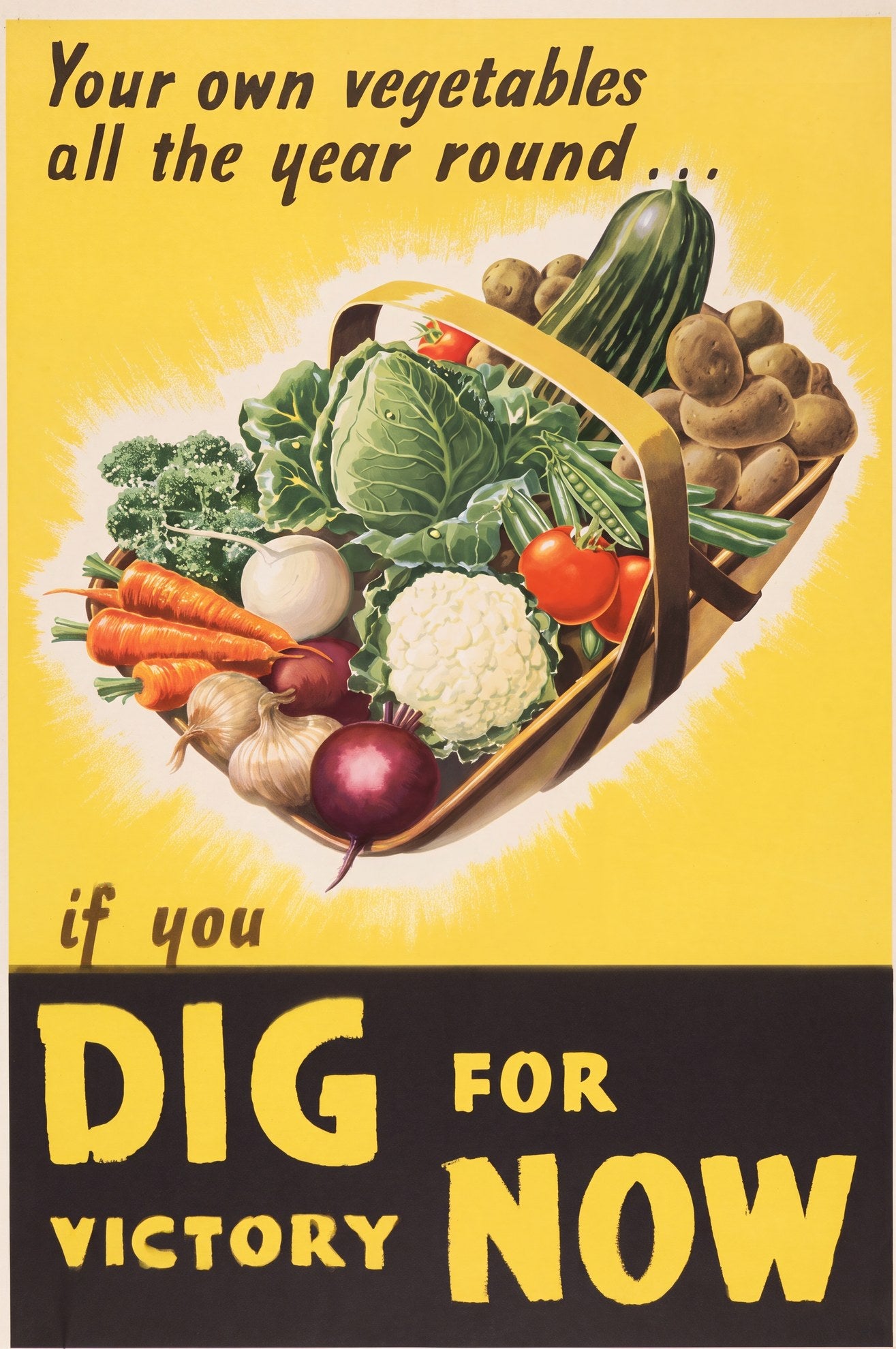
Dig for Victory 1942 | Vegetable Basket WW2 Poster
This service is currently unavailable,
sorry for the inconvenience.
Pair it with a frame
Frame options are for visualization purposes only.
FRAME STYLE
MATTING SIZE
BUILDING YOUR EXPERIENCE
powered by Blankwall
Take a few steps back and let your camera see more of the scene.
powered by Blankwall
Was this experience helpful?
A woven basket overflows with fresh vegetables against sunshine yellow - carrots, cauliflower, cabbage, potatoes, tomatoes rendered in the optimistic palette of British wartime encouragement.
Designed by Irene Mitchell for the Ministry of Agriculture in 1942, this poster belonged to the campaign that transformed Britain's food landscape during World War II. When German U-boats threatened food imports, the government turned to its own citizens: grow your own vegetables, all year round.
Mitchell's composition balances practical instruction with visual appeal. The abundant basket suggests the rewards of home cultivation, while the sunshine yellow background radiates the confidence the campaign sought to instill. The hand-drawn typography shifts from conversational brown to assertive yellow-on-black.
Part of the propaganda effort that created over 1.4 million allotments by 1943, producing more than one million tons of vegetables annually. A reminder that ordinary citizens could help win a war.
Couldn't load pickup availability
Share
A woven basket overflows with fresh vegetables against sunshine yellow - carrots, cauliflower, cabbage, potatoes, tomatoes rendered in the optimistic palette of British wartime encouragement.
Designed by Irene Mitchell for the Ministry of Agriculture in 1942, this poster belonged to the campaign that transformed Britain's food landscape during World War II. When German U-boats threatened food imports, the government turned to its own citizens: grow your own vegetables, all year round.
Mitchell's composition balances practical instruction with visual appeal. The abundant basket suggests the rewards of home cultivation, while the sunshine yellow background radiates the confidence the campaign sought to instill. The hand-drawn typography shifts from conversational brown to assertive yellow-on-black.
Part of the propaganda effort that created over 1.4 million allotments by 1943, producing more than one million tons of vegetables annually. A reminder that ordinary citizens could help win a war.
