Vintage Poster Archives
Clear the Tracks WW2 Poster 1943 | US Coal Conservation
This service is currently unavailable,
sorry for the inconvenience.
Pair it with a frame
Frame options are for visualization purposes only.
FRAME STYLE
MATTING SIZE
BUILDING YOUR EXPERIENCE
powered by Blankwall
Take a few steps back and let your camera see more of the scene.
powered by Blankwall
Was this experience helpful?
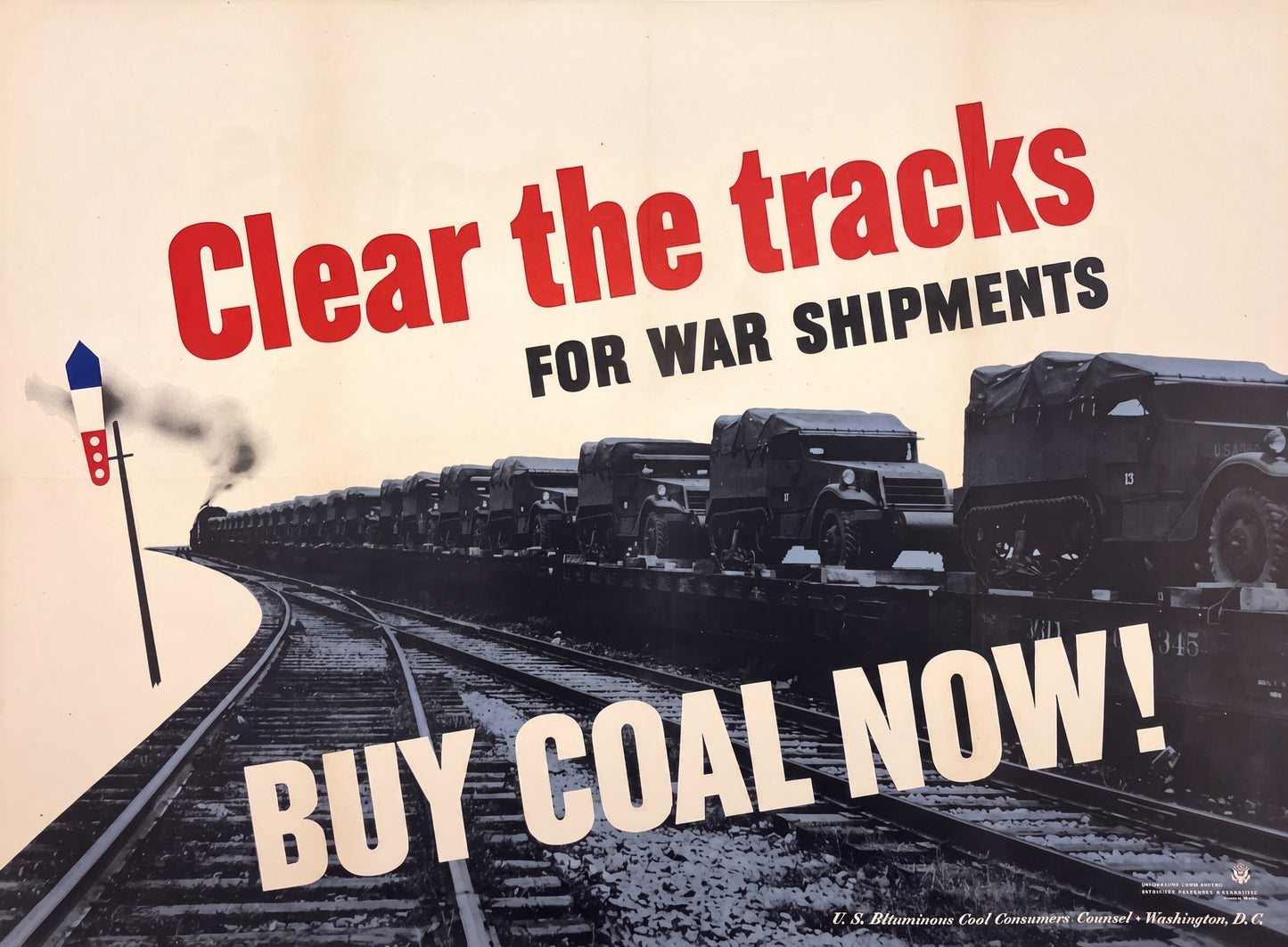
A freight train loaded with military half-tracks rolls through the American landscape, rendered in sepia tones with bold red and cream typography. The composition merges industrial photography with wartime urgency, creating one of the most direct home front appeals of the war.
Designed for the U.S. Bituminous Coal Consumers' Counsel in 1943, this poster addressed a critical challenge: ensuring adequate fuel supplies for military logistics and civilian heating. The railway imagery reinforced the message - coal moved by rail, and clear tracks meant efficient war production.
This archival print represents the intersection of industrial policy and propaganda design during America's peak wartime mobilisation. The stark visual metaphor made an abstract policy imperative tangible for ordinary citizens.
A natural fit for those drawn to industrial design, wartime history, or the visual culture of the American home front.
Couldn't load pickup availability
Share
A freight train loaded with military half-tracks rolls through the American landscape, rendered in sepia tones with bold red and cream typography. The composition merges industrial photography with wartime urgency, creating one of the most direct home front appeals of the war.
Designed for the U.S. Bituminous Coal Consumers' Counsel in 1943, this poster addressed a critical challenge: ensuring adequate fuel supplies for military logistics and civilian heating. The railway imagery reinforced the message - coal moved by rail, and clear tracks meant efficient war production.
This archival print represents the intersection of industrial policy and propaganda design during America's peak wartime mobilisation. The stark visual metaphor made an abstract policy imperative tangible for ordinary citizens.
A natural fit for those drawn to industrial design, wartime history, or the visual culture of the American home front.
