Vintage Poster Archives
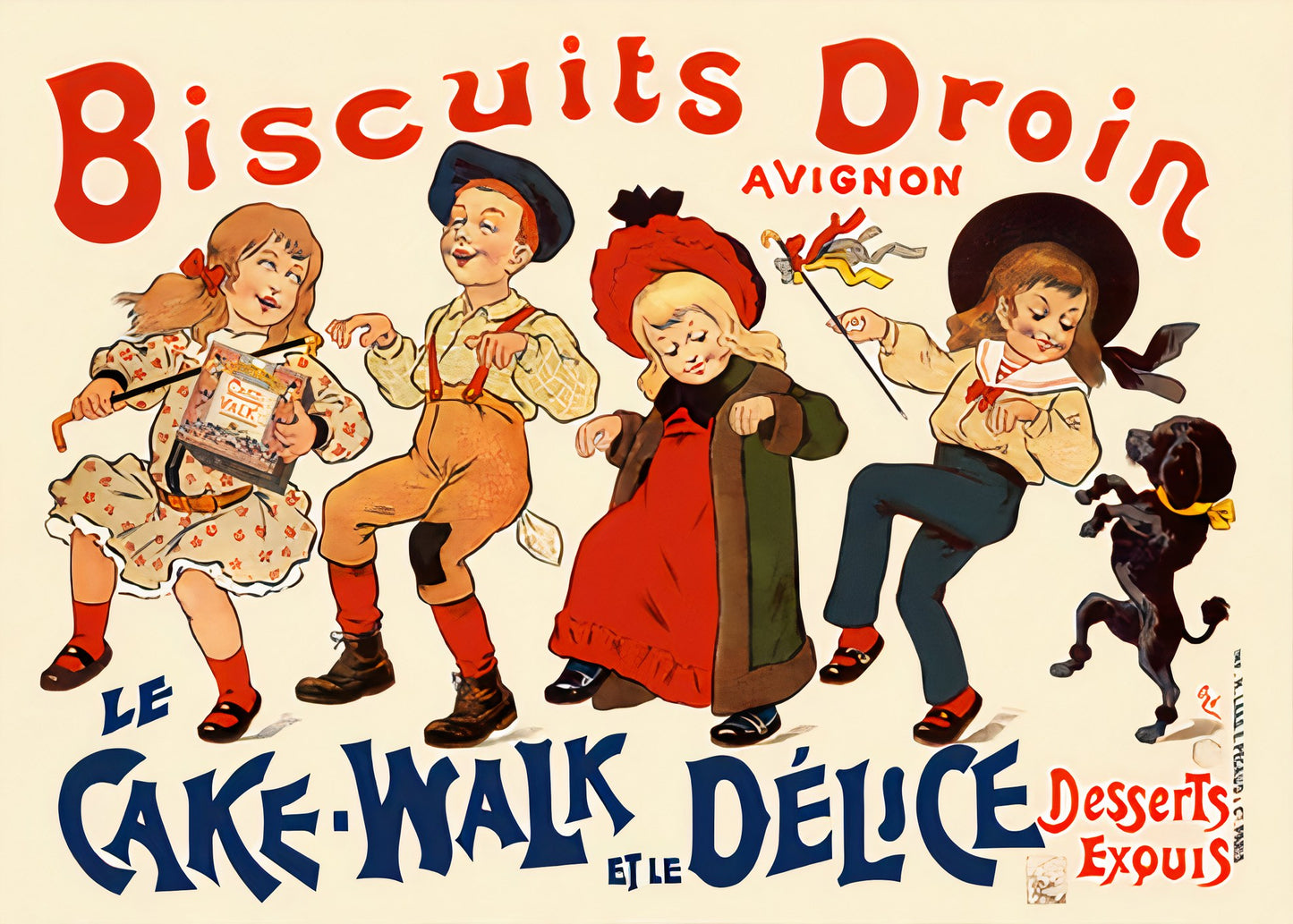
Biscuits Droin 1902 | Eugène Ogé Cake Walk Poster
This service is currently unavailable,
sorry for the inconvenience.
Pair it with a frame
Frame options are for visualization purposes only.
FRAME STYLE
MATTING SIZE
BUILDING YOUR EXPERIENCE
powered by Blankwall
Take a few steps back and let your camera see more of the scene.
powered by Blankwall
Was this experience helpful?
Four children perform the cake walk dance alongside a playful black dog in this charming 1902 food poster. Bold red lettering announces "Biscuits Droin" from Avignon, while the cream background frames the joyous scene with Belle Époque warmth.
Designed by Eugène Ogé for the Avignon biscuit manufacturer, this poster depicts the moment when the American cake walk dance had captivated French society. Ogé (1861-1936) brought his characteristic humour to commercial lithography, creating advertisements that doubled as cultural documents of their era.
The poster belongs to the golden age of French food advertising, when confectionery companies commissioned established artists rather than commercial agencies. Ogé's approach moved away from the decorative excess of Art Nouveau toward character-driven illustration that spoke directly to everyday consumers.
Reproduced as an archival print from the original 1902 lithograph, preserving the hand-lettered typography and period colour palette that made French poster art the envy of Europe.
Couldn't load pickup availability
Share
Four children perform the cake walk dance alongside a playful black dog in this charming 1902 food poster. Bold red lettering announces "Biscuits Droin" from Avignon, while the cream background frames the joyous scene with Belle Époque warmth.
Designed by Eugène Ogé for the Avignon biscuit manufacturer, this poster depicts the moment when the American cake walk dance had captivated French society. Ogé (1861-1936) brought his characteristic humour to commercial lithography, creating advertisements that doubled as cultural documents of their era.
The poster belongs to the golden age of French food advertising, when confectionery companies commissioned established artists rather than commercial agencies. Ogé's approach moved away from the decorative excess of Art Nouveau toward character-driven illustration that spoke directly to everyday consumers.
Reproduced as an archival print from the original 1902 lithograph, preserving the hand-lettered typography and period colour palette that made French poster art the envy of Europe.
